
The Hidden Structure of Arguments
Every argument has a structure — a conclusion supported by premises, which are themselves supported by further evidence or reasons. Yet in normal discourse this structure is hidden, tangled in rhetoric, emotion, and verbal noise.
Argument mapping makes the structure explicit.
What Is an Argument Map?
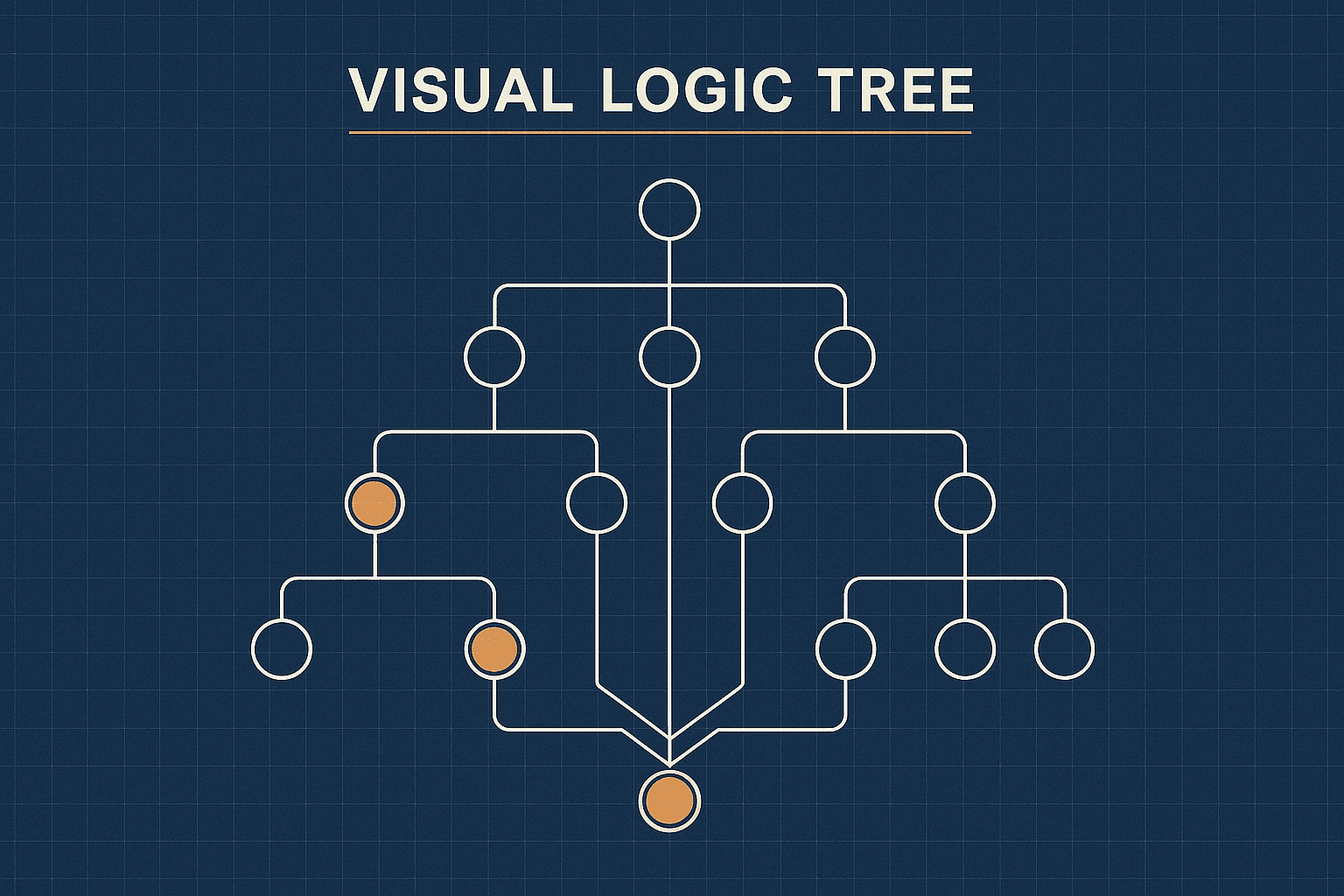
An argument map is a diagram that represents the logical relationships between claims. At its simplest:
[Conclusion]
    ↑
[Supporting Premise] ← [Evidence]
    ↑
[Rebuttal to Premise]
More complex maps can represent multi-level arguments, objections, rebuttals to objections, and convergent or linked support structures.
Why It Helps
Clarity
Mapping forces arguers to state their claims precisely. Vague generalisations that survive in conversation collapse under the demand for explicit premises.
Finding the Real Dispute
Often, two people who appear to disagree about a conclusion actually share that conclusion but diverge on a sub-premise. Mapping surfaces where the logical gap actually lies.
Evaluating Strength
Once premises are explicit, their truth or likelihood can be assessed independently. Weak premises can be challenged without attacking the whole argument.
Applications
- Policy analysis: Mapping competing policy arguments to identify points of genuine disagreement.
- Education: Teaching critical thinking by requiring students to map their own arguments before submitting essays.
- Mediation: Showing parties in dispute the logical structure of each other's positions.
Getting Started
Our Argument Mapping tool provides a browser-based environment for constructing, sharing, and critiquing argument maps on any topic.