
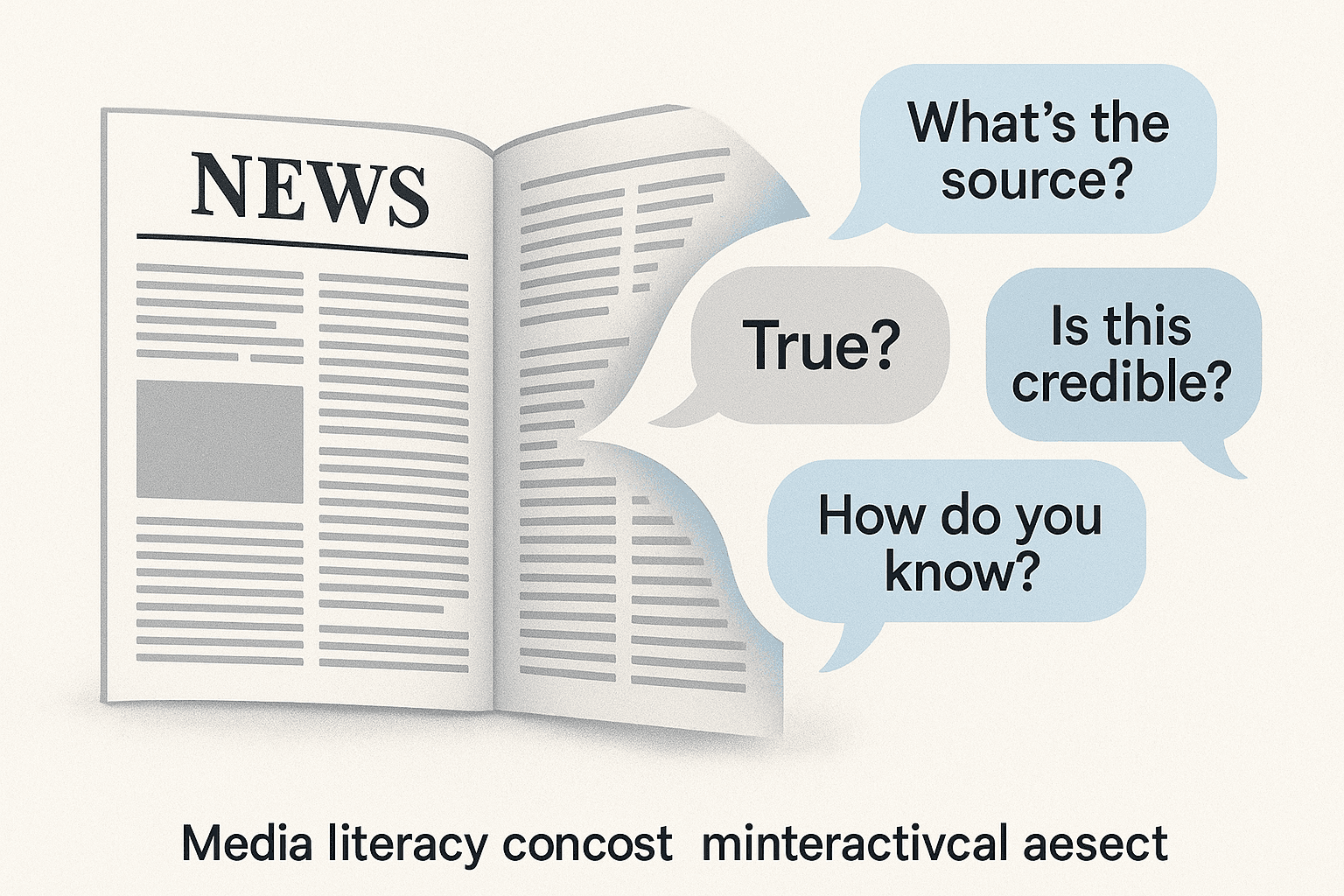
The Problem with Passive Reading
Most of us read articles passively, accepting or rejecting claims without probing their basis. We may finish an article feeling informed when we have actually absorbed the author's framing uncritically.
Media literacy education has long struggled with this problem. Instructions to "check your sources" or "consider the author's perspective" rarely translate into changed behaviour in the moment of reading.
A Conversational Alternative
What if reading were more like a conversation? In a good conversation, you ask questions, seek clarification, push back on weak claims, and ask for evidence. You don't simply receive.
Article Dialogue applies this conversational model to reading. Readers engage with an article through a structured interface that prompts:
- Clarification questions: What exactly is being claimed here?
- Evidence requests: What is the basis for this assertion?
- Perspective identification: Whose view is represented? Whose is absent?
- Alternative framings: How might this story be told differently?
Why This Works
Research in learning science suggests that generative processing — actively constructing responses rather than passively receiving — leads to deeper comprehension and more critical evaluation.
Dialogue also introduces cognitive friction: the slight resistance of formulating a question forces a moment of reflection that passive reading bypasses.
Applications
- Classrooms: Students interrogate primary sources in groups, building shared understanding through structured inquiry.
- Newsrooms: Journalists use the tool in editorial review to surface hidden assumptions.
- Personal use: Individuals apply it to contentious articles to audit their own reactions.